
Official-source check, 3 October 2026: INTERPOL’s Identify Me page, case 2023-BEL01, continues to describe the woman as unidentified. It records discovery on 6 August 1991 and an estimated death between August 1989 and August 1991. This article removes unsupported migration, lifestyle and offender inferences and labels methods as proposals. Permission to reuse the credited newspaper photographs still needs verification. Information that may help identify her should be sent through the official Belgian police contact route.
In the quiet town of Holsbeek, Belgium, nestled just a half-hour’s drive from the bustling heart of Brussels, a haunting mystery has lingered unresolved for over three decades. It was on a summer day, August 6, 1991, when the serene atmosphere of this rural community was shattered by a grim discovery: the body of an unidentified woman found submerged in a rainwater well in the grounds of a cottage on Attenhovendreef.
This is the story of “The Woman in the Well”, a case that has puzzled investigators and haunted locals since that fateful day. As a data scientist with a deep interest in analytical investigations, I find myself drawn to this enigmatic tale, compelled to explore how modern data analysis techniques might finally give her a name and bring closure to this cold case.
A Glimpse into Holsbeek in the Late ’80s and Early ’90s
The official case information does not establish the woman’s nationality, migration history or any connection to trafficking. Broad events in Europe during this period cannot determine her personal circumstances.
Unveiling the Evidence: Who Was She?
The woman discovered in the well presented a series of facts, each a fragment of her untold story.
Physical Characteristics
- Age: Estimated between 30 and 55 years old.
- Height: Approximately 154 cm (5 feet), indicating a petite build.
- Dental Condition: She had poor dental health, with missing front teeth and several fillings in her lower jaw. A dental prosthesis for her missing teeth was likely but not found with her remains.
- Unknown Features: Due to the state of decomposition after up to two years in the well, her skin tone, hair color, and eye color could not be determined.
The dental description is a potentially useful identifying detail. It does not establish her income, social circumstances or lifestyle.
Clothing and Personal Items
The items found with her body offer additional insights:
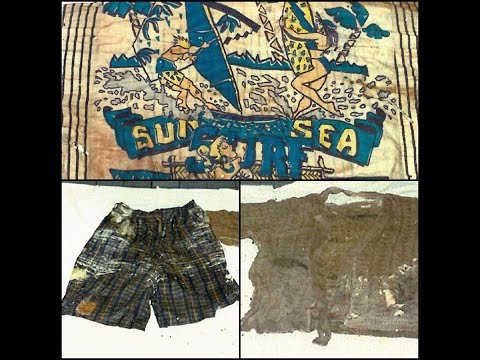
- T-Shirt: A distinctive beige shirt with black vertical stripes, featuring an image of two surfers, three palm trees, and the words “SUN, SURF, SEA”.
- Shorts: Dark plaid shorts, suggesting casual attire suitable for warm weather.
- Cardigan: A beige/brown knitted cardigan, perhaps indicating cooler evening temperatures or a practical addition to her outfit.
- Ring: A plastic or horn ring, an accessory that could be culturally significant or simply a personal keepsake.
The t-shirt, in particular, stands out as a potential key to her identity. Its unique design might link her to specific locations, events, or retail outlets.
The Mystery Deepens: The Circumstances of Her Death
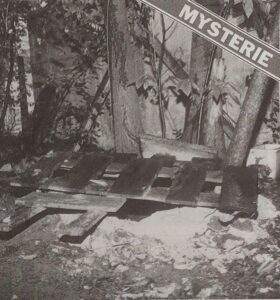
The body was found in a rainwater well beside a chalet. The published location does not identify who was involved or establish their relationship to the property.
The Location: A Secluded Spot
INTERPOL places the discovery in a rainwater well belonging to a chalet on Attenhovendreef, a rural forest road in Holsbeek. The public description does not establish how often the property or well was used.
Distance from Public Access
The cited public information does not establish the precise distance of the well from the road, the property’s occupancy history or who could access it.
Questions about access, occupancy and events at the site require investigative records. The public facts cited here do not answer them.
Access to the Property
A discovery on private property does not establish that anyone responsible had permission to enter or a connection to the owner.
Concealment in the Well
The public discovery details do not establish where the woman died, how her body reached the well or the intentions of anyone involved.
Possible Research Methods, Not Reported Findings
The techniques below are possible research approaches, not work demonstrated in this article or confirmed as performed in this case. Access to remains, dental records and other non-public evidence requires appropriate authority and qualified specialists. Any computational match would need independent verification.
1. Digital Reconstruction of Her Identity
Facial Reconstruction with Machine Learning: Although her physical features were compromised, advances in forensic anthropology and machine learning could enable a digital reconstruction of her face. By inputting skull measurements into algorithms trained on craniofacial data, we might generate a visual approximation of her appearance.
2. Analyzing the T-Shirt’s Origin
Image Recognition and Retail Data Mining: The unique t-shirt could be traced back to its manufacturer or retailer. By using image recognition algorithms to scan digitized catalogs, advertisements, and fashion magazines from the late ’80s and early ’90s, we might identify the brand or store that sold the shirt.
Case Application:
- Data Collection: Compile a database of fashion imagery from that era, focusing on surf and beach-themed apparel.
- Algorithm Deployment: Utilize convolutional neural networks (CNNs) to match the t-shirt’s design with existing images.
- Retailer Outreach: Contact companies that produced similar clothing for sales records or batch information.
3. Geospatial Analysis of Missing Persons
Mapping Missing Persons Reports: By creating a geospatial map of missing women fitting her description from Belgium and neighboring countries, we can identify patterns or clusters that may correlate with her disappearance.
Case Application:
- Data Aggregation: Gather missing persons data from 1989 to 1991 across Europe.
- Spatial Visualization: Use GIS software to plot the data geographically.
- Temporal Correlation: Align disappearances with the estimated time of death to narrow down possibilities.
4. Dental Record Cross-Referencing
Dental Informatics: Her dental features are distinctive. By digitizing dental records and using pattern matching algorithms, we can compare her dental profile with those in missing persons databases.
Case Application:
- Data Standardization: Convert dental records into a standardized digital format.
- Algorithm Development: Employ matching algorithms that account for missing teeth, fillings, and prosthetics.
- International Collaboration: Work with dental associations across Europe to access and share records.
5. Isotope Analysis for Geographic Origin
Forensic Isotopic Analysis: Analyzing isotopes in teeth and bones can reveal information about geographic regions where she lived, based on local water and food sources.
Case Application:
- Sample Testing: Conduct isotopic analysis on her remains to detect signatures of elements like oxygen, strontium, and lead.
- Data Interpretation: Compare results with isotopic maps of Europe to identify regions consistent with her isotopic profile.
- Hypothesis Formation: Use findings to hypothesize her movements or places of residence.
Incorporating New Insights: The 2023 Investigation
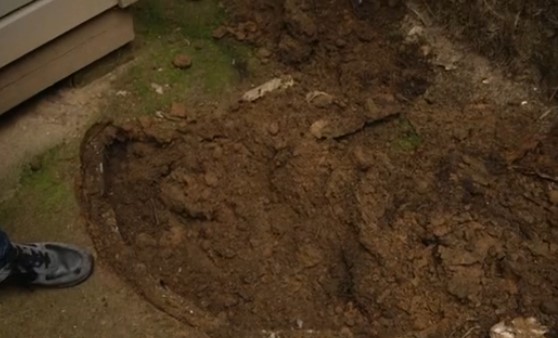
The linked 2023 reporting describes renewed attention to the site. This article does not establish that a site revisit recovered new evidence or that the proposed data-science methods were performed. Those claims require confirmation from the original reporting or investigators.
Conclusion
The available public information leaves important questions unanswered. The most useful next step for anyone who recognises the clothing or other identifying details is to contact the investigators through the official case page.
Sources: